Click here to read important disclaimer & disclosures Click here to see more about Lion Rock Resources
Gold-Lithium-Roar
TSX-V: ROAR | OTCQB: LRRIF
Advancing the Flagship
Volney Gold-Lithium Project
In Black Hills, South Dakota USA
HIGH-GRADE GOLD & LITHIUM CONFIRMED
Maiden Drilling Underway Following C$5.3M Financing
Click Here to Read Sponsor Disclosure
With gold trading near all-time highs above US$4,000 an ounce, and lithium poised for a sharp rebound from cyclical lows, Lion Rock Resources Inc. (TSX-V: ROAR)(OTCQB: LRRIF) is actively drilling one of the most exciting US-based exploration projects in all of North America — the Volney Gold-Lithium Project.
The early exploration stage Volney project is nestled in the prolific northwestern Black Hills of South Dakota near some of the region’s most prolific gold operations, including the legendary Homestake Mine (43.9M oz Au produced) and Coeur Mining’s Wharf Mine (93K oz Au produced in 2023).
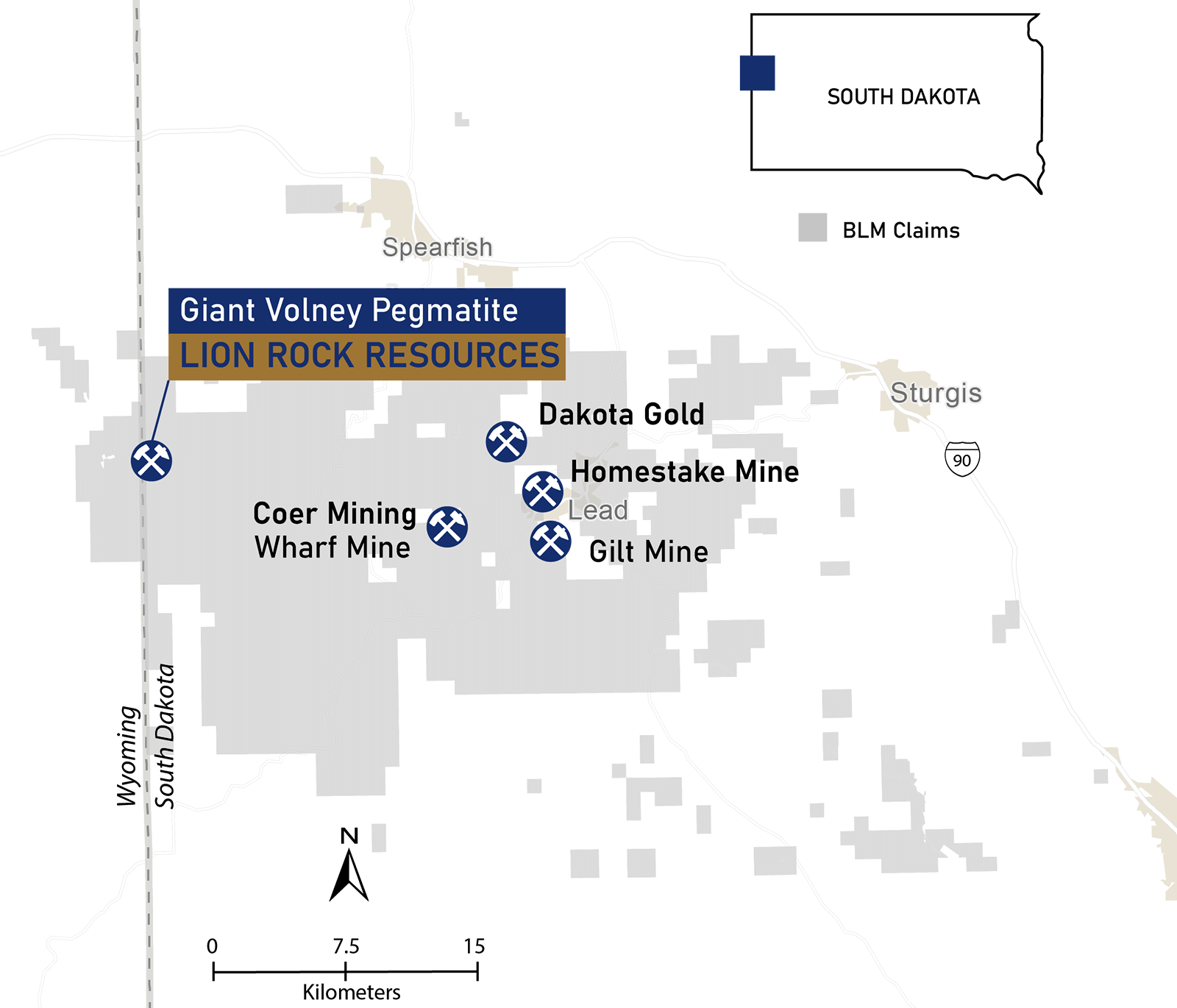
The Volney project presents a true first-mover opportunity: a high-grade, multi-commodity system — now fully controlled by Lion Rock “ROAR” — that’s been hiding in plain sight for over a hundred years.
Held on private land by the same family for more than a century, the project is now being systematically explored — and drilled — for the first time ever thanks to a unique local connection and years of behind-the-scenes geological groundwork spearheaded by the ROAR team.
You’ll be learning more about that in just a moment in our exclusive interview with Lion Rock chief geologist Dr. Jeff Hrncir.
Yet, before we take you there, it is critical to understand that Volney isn’t just another gold-dominant project surrounded by majors.
It’s a rare hybrid of both high-grade gold AND high-grade lithium — an almost unheard-of combination in the mining world.
Why Volney Stands Out Among Its Peers:
- High-Grade Gold: Historical channel sampling at Volney returned 18.2 grams per tonne (g/t) gold over 18.3 meters with high-grade gold zones being drill-tested as you read this.
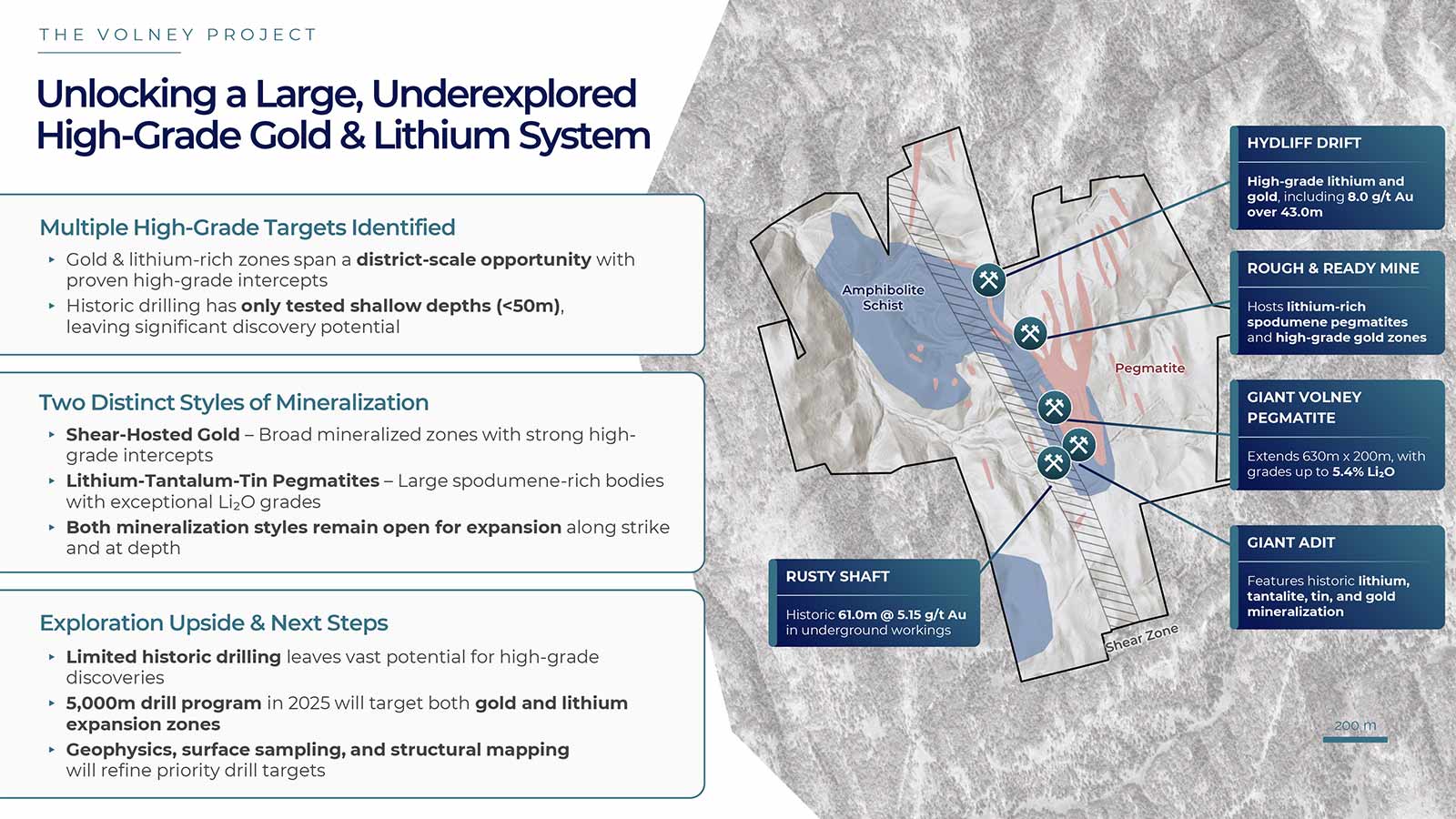
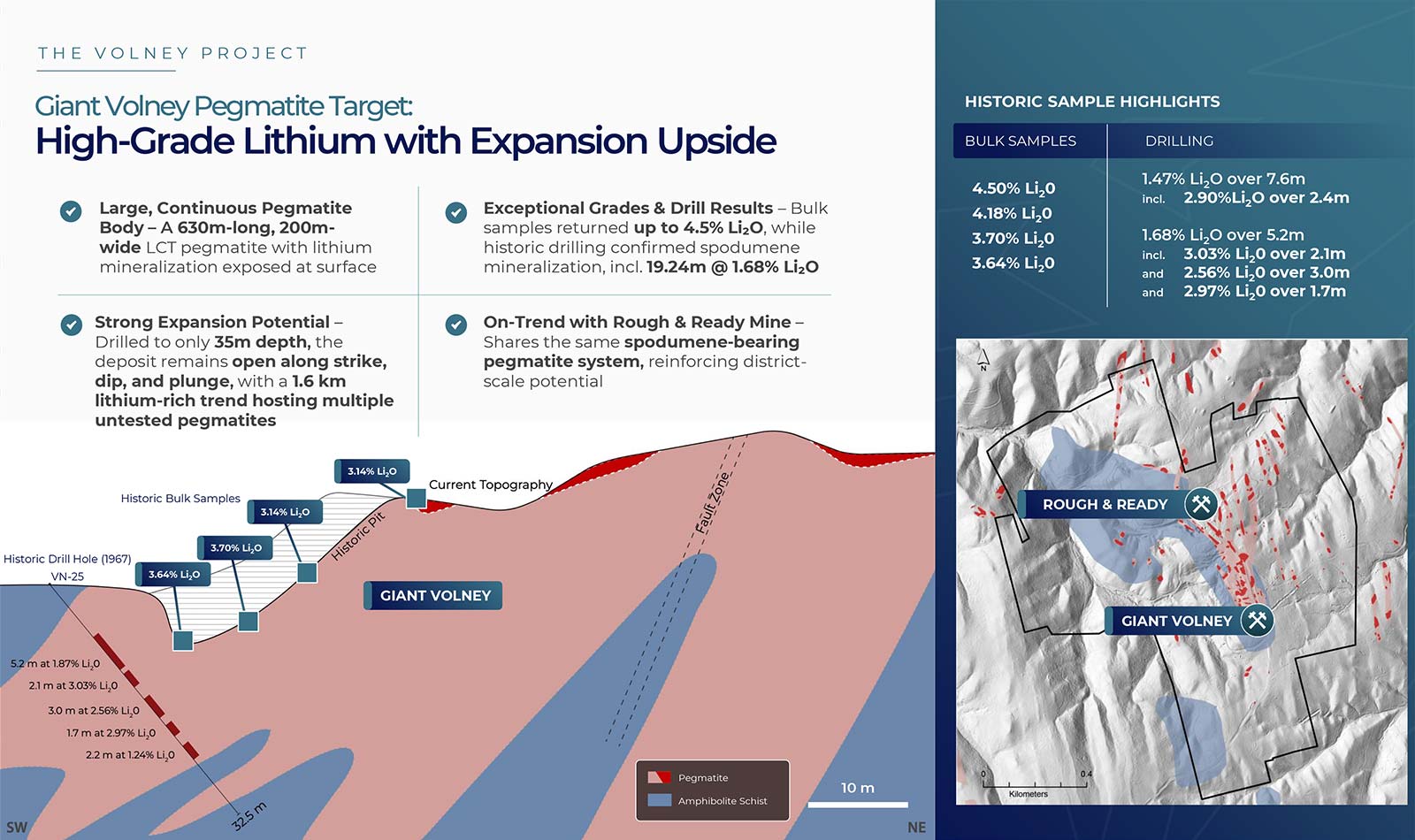
- High-Grade Lithium: The Giant Volney Pegmatite, a massive 635-meter-long lithium-rich spodumene pegmatite at Volney, has produced grab samples grading up to 5.4% lithium oxide (Li2O) with an average of 4.4% Li2O — far exceeding typical economic grades.
- Strategic Location: The Volney project is situated entirely on private land, allowing for a fast-tracked permitting process and leading to an expedited start to Phase One drilling.
With drills now spinning, Volney represents an early-stage opportunity to get positioned ahead of what could potentially evolve into a truly world-class, multi-commodity discovery within the ultra-safe confines of the United States.
Drilling Underway: Volney’s Maiden Program Begins
Following the completion of a C$5.3 million financing in Q3 2025, Lion Rock has now begun its highly anticipated ~5,000-meter drill program at the Volney Project in South Dakota’s historic Black Hills.
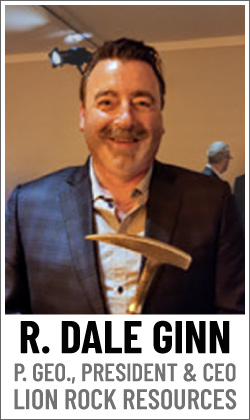
Marking a major milestone for the company, Lion Rock CEO Dale Ginn commented:
“We're very excited to begin drilling at Volney, following an exceptional year of groundwork that defined strong gold and lithium systems across the project. The new magnetic data and recent surface results have given us a clear picture of where to focus initial drilling. This is the first modern subsurface testing of the Volney trend and we believe it has the potential to outline a significant multicommodity discovery.”
The inaugural campaign is fully funded and designed to test multiple gold and lithium targets identified through historical drilling, surface sampling, and recent fieldwork.
Recent magnetic drone survey and 3D inversion data have further refined the geological model, identifying strong magnetic highs coincident with gold mineralization and magnetic lows correlated with lithium-bearing pegmatites — reinforcing the scale of the Volney system and guiding the initial drill holes.
The ~5,000-meter program marks the first-ever modern subsurface testing of the Volney trend — a structurally controlled gold and LCT pegmatite system now traced over more than 1,000 meters of strike length.
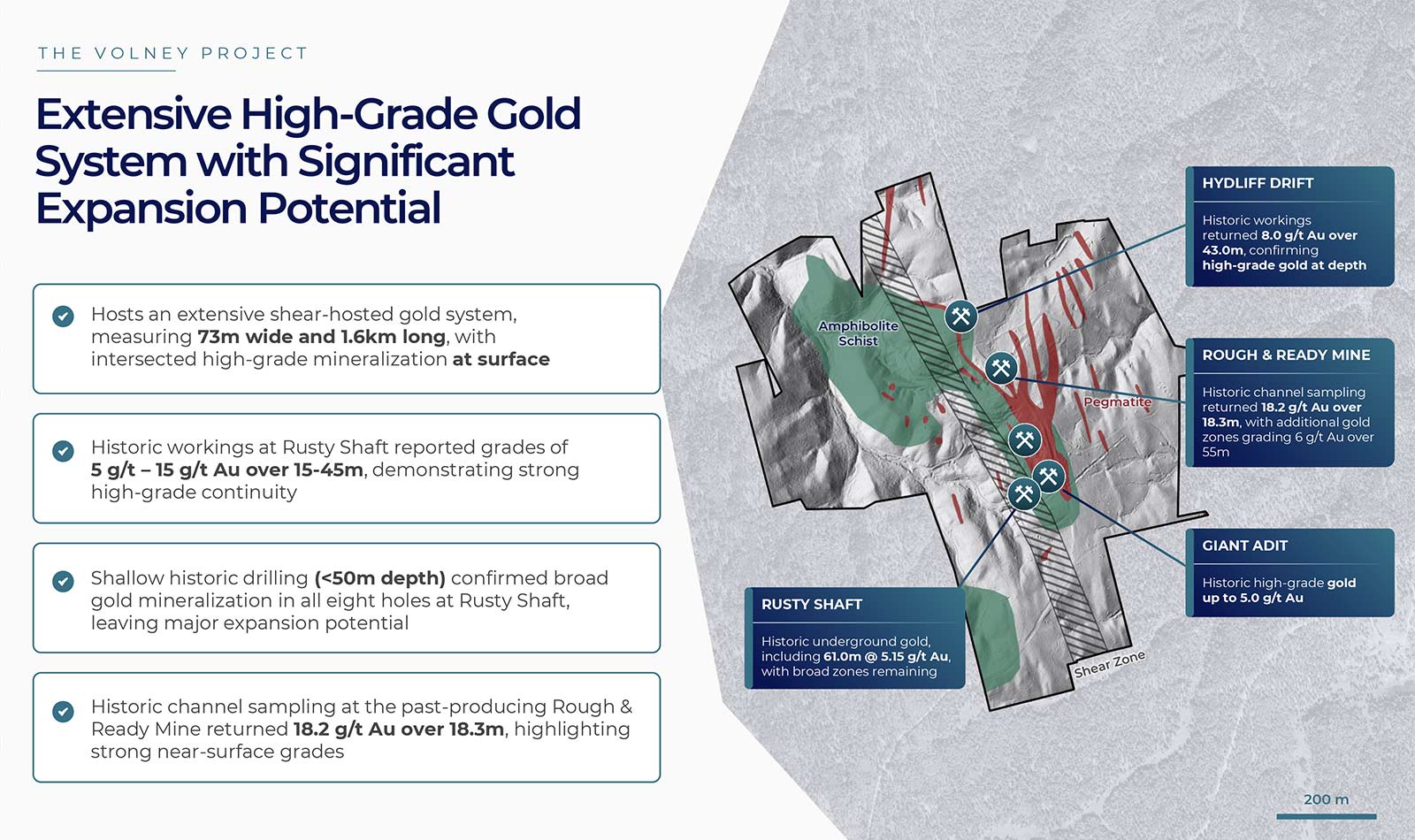
The newly-commenced Phase Oneprogram could be a bona fide game-changer, especially considering that past drilling — limited to just 50 meters depth — intersected significant mineralization, including in all 8 historical holes drilled at the Rusty Mine Shaft.
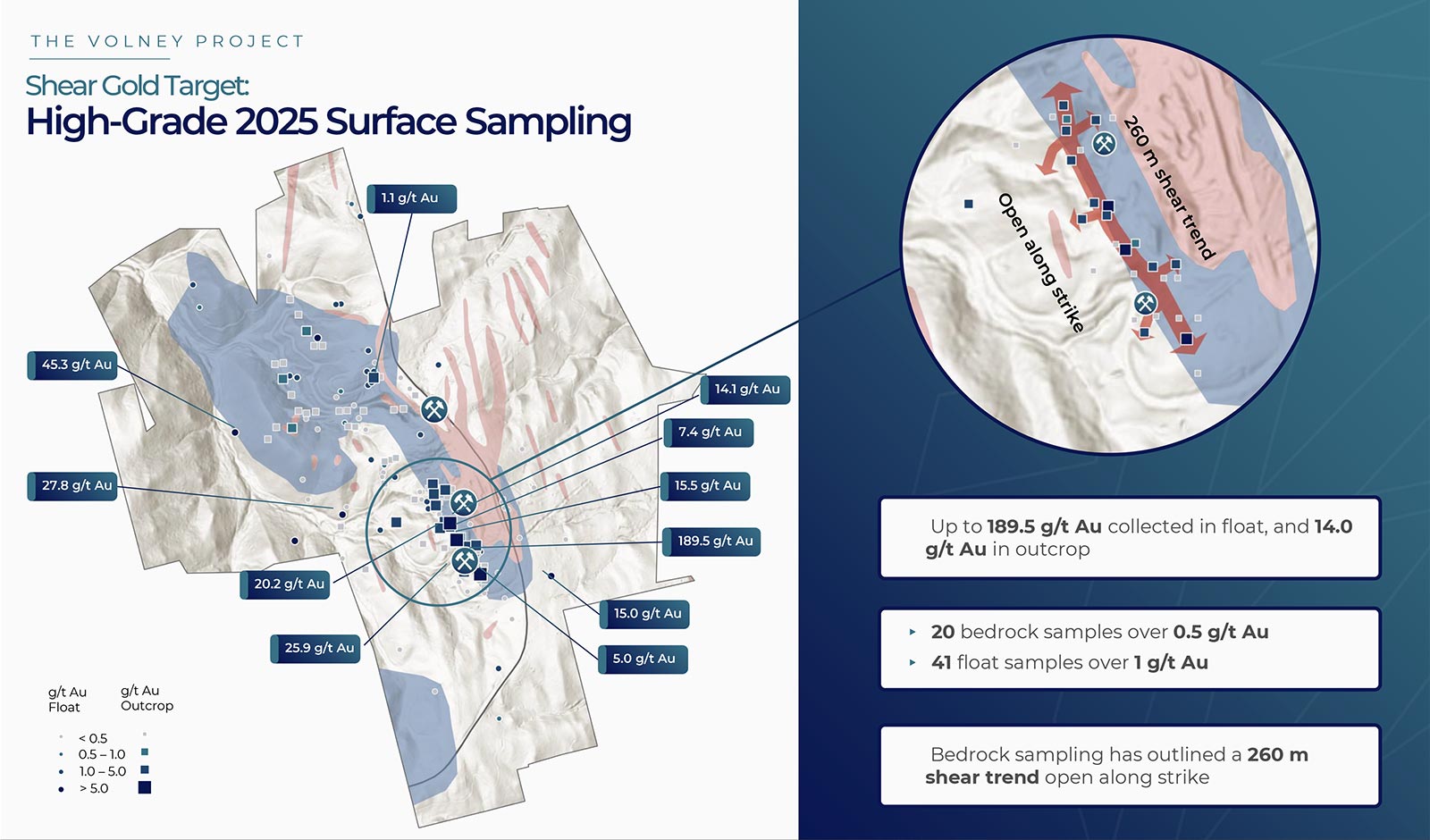
The first phase will prioritize high-potential targets near historical workings where surface sampling returned standout results — including chip samples up to 14.0 g/t Au and float samples grading as high as 189.5 g/t Au — while also testing lithium-bearing pegmatites along the known 1,000-meter structural corridor.
In the junior mining space, few catalysts carry more weight than a successful early-stage drill program… and Volney is shaping up to be just that kind of opportunity.
With drilling just now underway, any confirmation of depth continuity in gold-lithium mineralization could result in a significant rerating of the ROAR stock price — currently around US$0.25 per share.
Ginn added:
“The Volney Project is unique in that it contains multiple commodities including gold, lithium, tantalum, and tin, all of which are of a high-grade nature and near surface. The gold system runs the full length of the property and contains numerous shallow trenches, pits, and other workings, but is remarkably absent of any meaningful drilling or recent exploration work. The fact that the entire project lies on private land and is road accessible year-round decreases permitting time and allows for a timely and aggressive exploration program.”
Speaking of known Au mineralization, the Volney project boasts high-grade gold results — including 18.2 grams per tonne gold (g/t Au) over 18.3 meters — from historical channel sampling that the ROAR team is now testing at-depth.
And with the drills targeting both high-grade gold AND high-grade lithium zones, Volney is poised to deliver one of the most anticipated early-stage discovery stories in the US exploration space this year and well into 2026.
Volney’s Giant Lithium Pegmatite Offers
Critical Metals Leverage
Making the early-stage Volney exploration property particularly unique, the underlying geology lays host to the Giant Volney Pegmatite — a large lithium-rich spodumene pegmatite zone with a known strike length of 635 meters at surface.
Not only are we talking about more than six football field-lengths of known strike, the project also boasts exceptionally high lithium grades from historical sampling.
For example, 15 grab samples from the Giant Volney Pegmatite returned grades of up to 5.4% lithium oxide (Li2O) at an average grade of 4.4% Li2O.
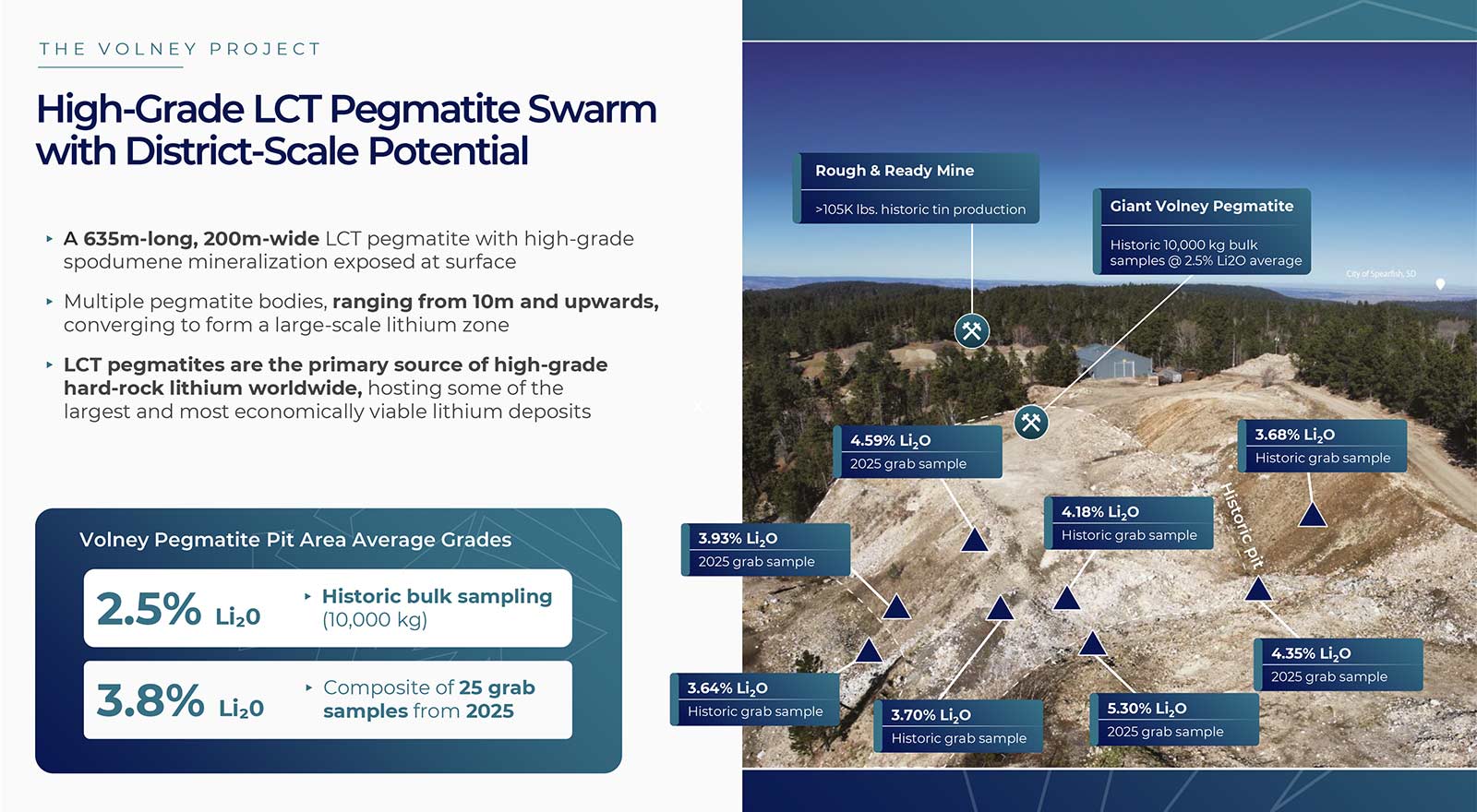
It’s worth noting that grades above 1% Li2O are widely considered economically attractive in the mining world.
Hence, to have grades north of 4% Li2O already confirmed at Volney through historical sampling is something that should continue to command the attention of industry players as Lion Rock drills the property at depth for the first time ever.
With lithium demand poised for its next structural breakout, this kind of high-grade, near-surface mineralization — hosted in a Tier-1 jurisdiction entirely on private land — makes Volney a standout among early-stage critical mineral plays.
As the ROAR team gets deeper and deeper into its newly-commenced Phase One program, the lithium component should emerge as a strategic driver alongside the project’s high-grade gold and tin potential.
And speaking of tin, Volney is home to what was once the most productive hard rock tin mine in US history — the Rough & Ready Mine. The past-producing mine produced over 105,000 lbs of high-grade tin in its heyday.
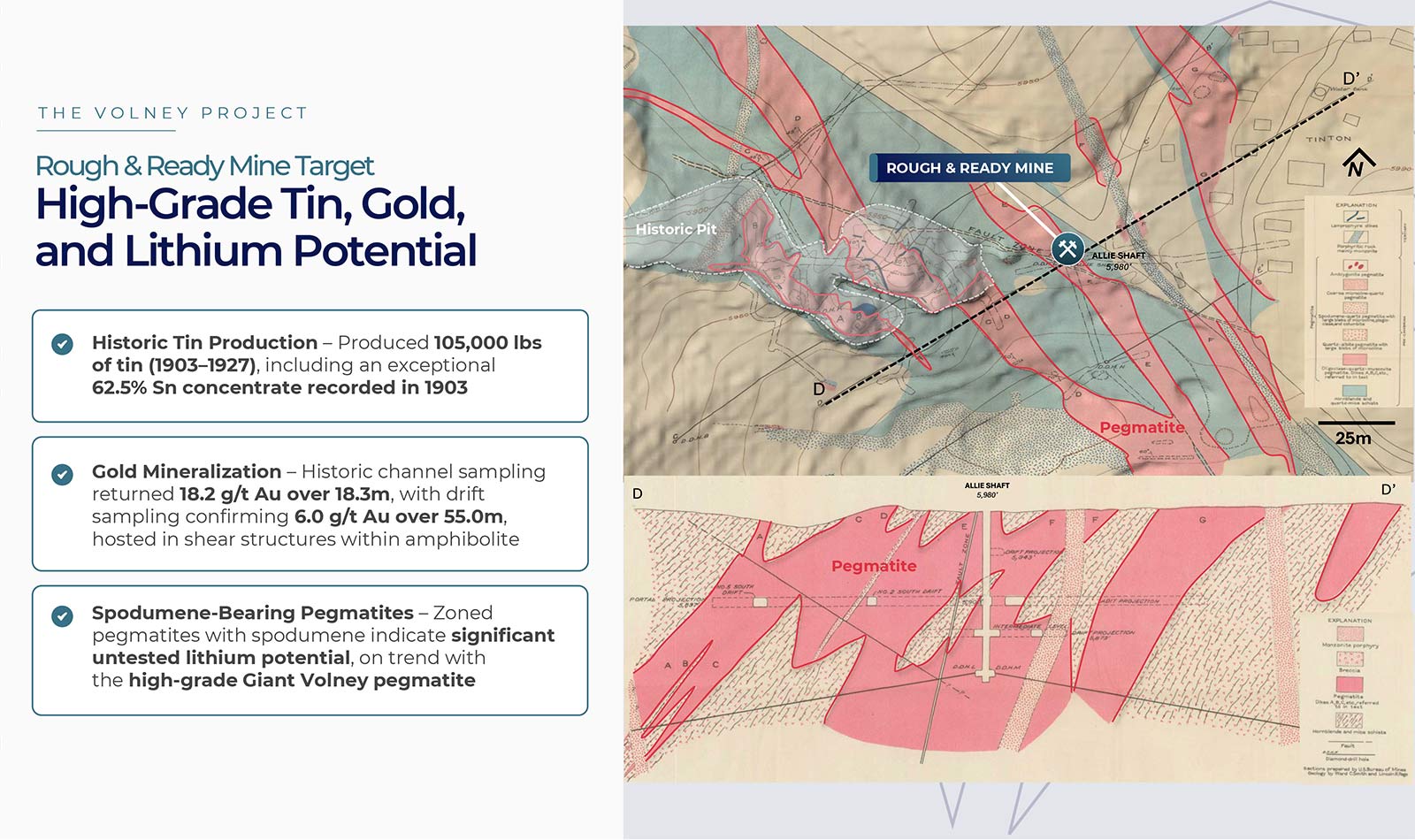
Cassiterite, the primary ore of tin, is found across the property in pegmatites that also host lithium and tantalum. And while tin is not the primary target metal for ROAR’s geological team, the site’s historical tin grades add yet another valuable layer to Volney’s multi-commodity upside.
Lion Rock: King of the Metals Mix
The market for critical metals is heating up — with none shining brighter than gold.

The yellow metal has been on an absolute tear, currently sitting above US$4,000 an ounce as we head toward 2026.
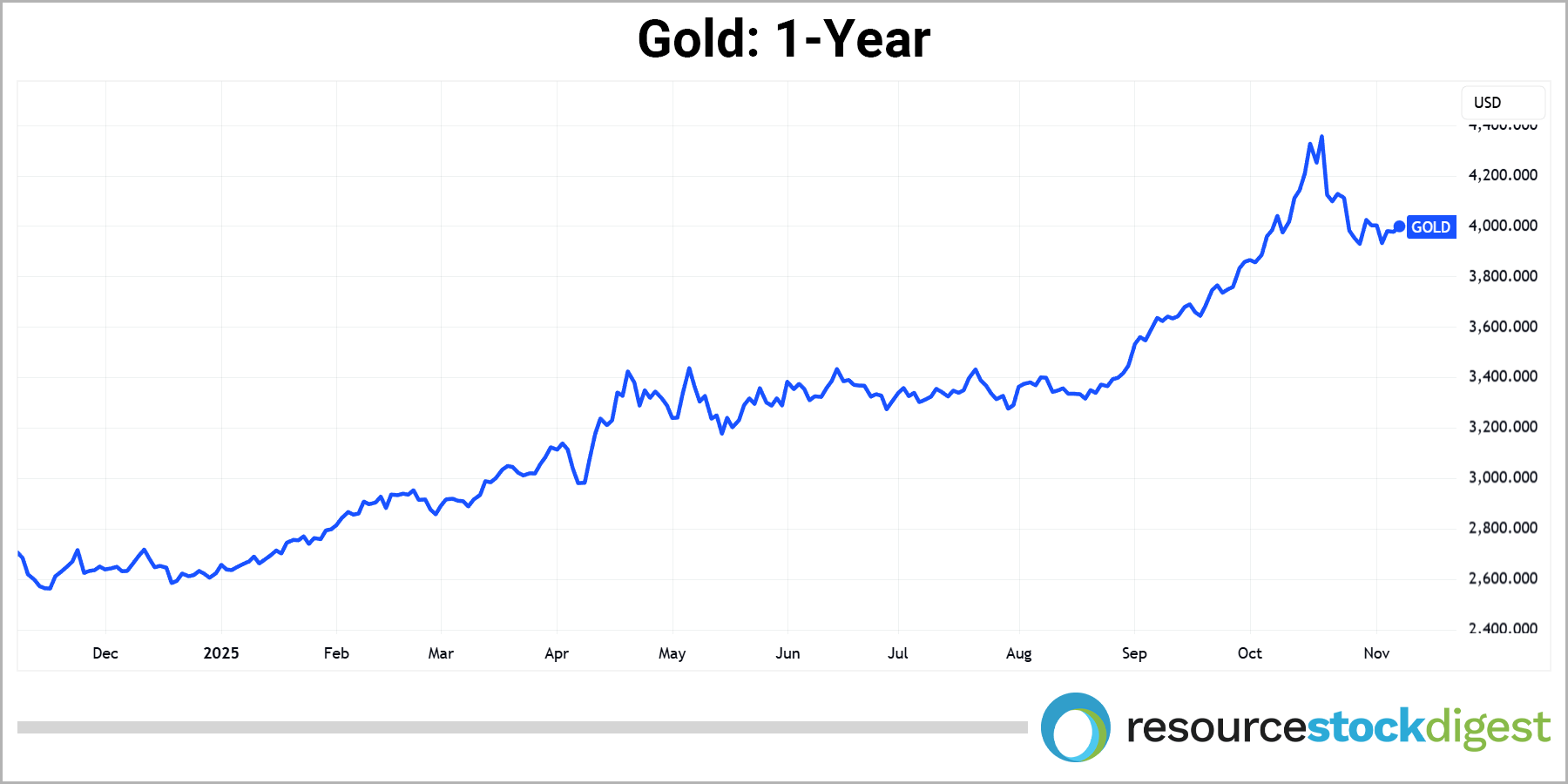
The rally is being driven by persistent inflation, long-term fiat currency debasement, and rising geopolitical instability — all of which have reinvigorated investor interest in gold as a safe-haven asset.
Central banks have been stockpiling gold at a record pace — more than triple the long-term average in recent quarters — signaling long-term confidence in the metal.

Wall Street heavyweights like Goldman Sachs, JPMorgan, and Citi now argue this move is just beginning. Analysts suggest that if central bank independence continues to erode and portfolio allocations shift further into bullion, gold could surpass US$5,000 per ounce.
At the same time, limited new discoveries and declining mine supply are tightening the market, making high-grade early-stage gold projects in safe mining jurisdictions such as the United States increasingly valuable.
That makes now an ideal time to get acquainted with this exceptionally well-positioned US-focused gold exploration company.
And it’s not just gold.
While lithium prices have pulled back from their 2021-22 peak, a bottom finally appears to be forming.
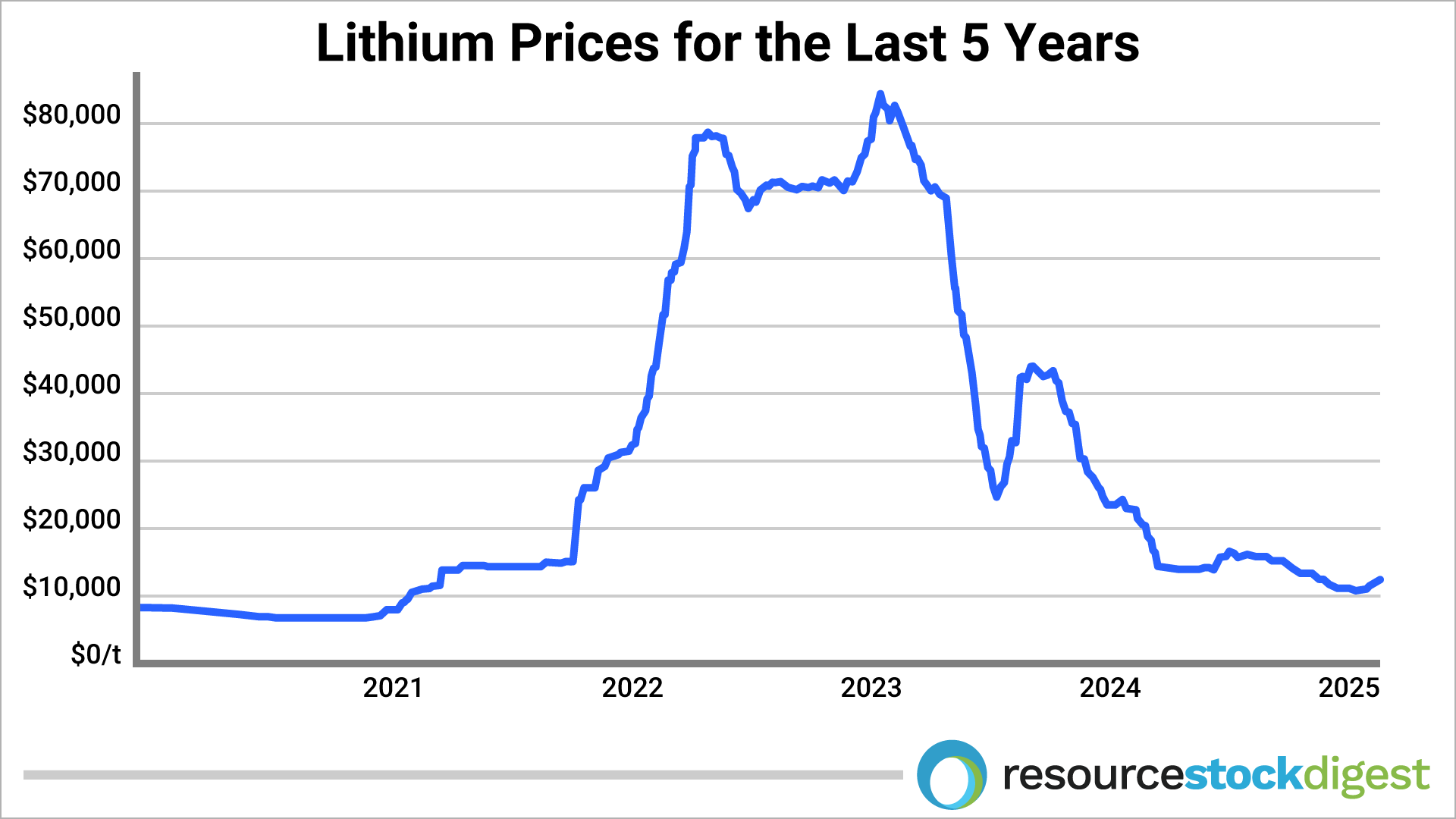
Global demand remains robust, driven by EVs and battery storage — with consumption expected to triple by 2030. Major producers are curbing supply, which should set up another powerful price move.

The US government continues to prioritize domestic lithium supply chains, making Volney’s high-grade, privately held land position in South Dakota an increasingly strategic asset as drilling advances.
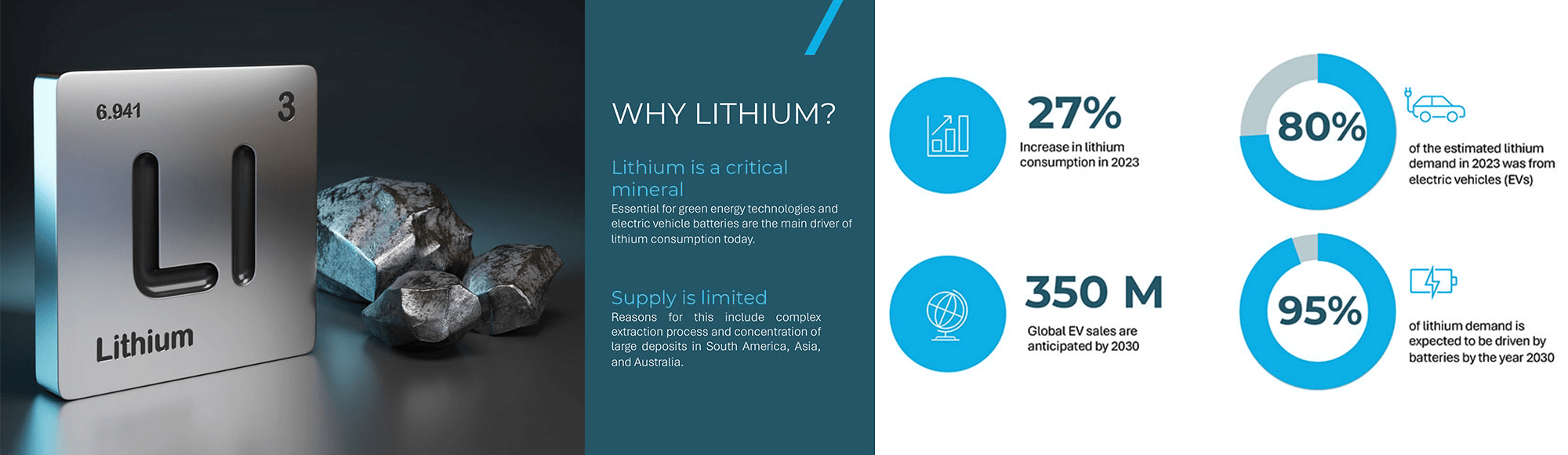
Even more rare? A project with both world-class lithium potential AND high-grade gold in the same system.
That’s what makes Lion Rock’s Volney project a true standout: a uniquely positioned, multi-commodity discovery opportunity in a safe, Tier-1 jurisdiction with the right metals mix for the market ahead.
Exclusive Interview with Lion Rock Resources
Chief Geologist Dr. Jeff Hrncir
Led by president & CEO Dale Ginn — a seasoned geologist and mining executive credited with over 10 million ounces of gold discoveries and more than C$500 million raised for exploration and development — Lion Rock Resources boasts a highly experienced management and technical team with an established track record of success in the North American precious metals sector.
You can learn more about the full ROAR team here.
Now, as promised, our own Gerardo Del Real of Resource Stock Digest and Junior Resource Monthly caught up with Lion Rock chief geologist Dr. Jeff Hrncir to discuss the untapped, near-surface gold-lithium potential at Volney.
Please enjoy our exclusive interview.
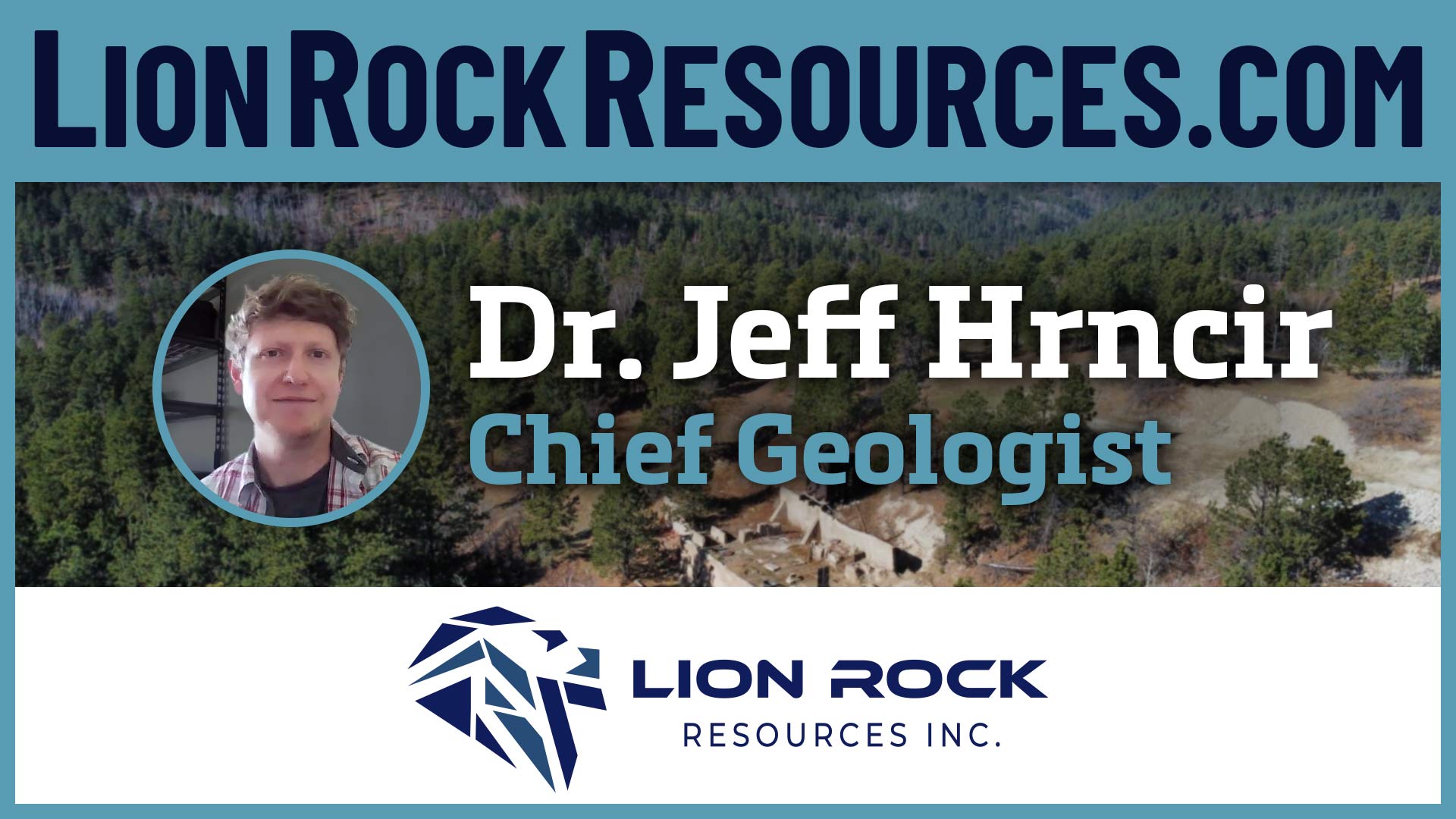

Gerardo Del Real: This is Gerardo Del Real with Resource Stock Digest. Joining me today is the chief geologist for Lion Rock Resources (TSX-V: ROAR)(OTCQB: LRRIF) — Dr. Jeff Hrncir. Jeff, it's great to have you on. How are you today?

Jeff Hrncir: I'm great, Gerardo. Thanks for having me on.
Gerardo Del Real: Listen, I want to start with your background. I mentioned you’re a chief geo but, honestly, you wear a lot of hats for Lion Rock. The “Dr.” title is definitely one that sticks out to me for this reason: your background is specific to this project and its geology.
And so when I look at your neighbors, and I see Homestake — and I see 42 million ounces of gold produced — and I look at the high-grade tin that was produced, and I look at the high-grade lithium that exists all over this property… how the heck does this stay a secret or untapped for this long?
There's historic production, and I want to talk about that. But I want to start with your background because I know that plays an important part as to how this was kept a secret for so long.
Jeff Hrncir: Yes, it does. And so I think, as it will become apparent in our conversation today, I'm a geologist by background and training. I come from a family that, while they're not necessarily geologists, we’ve been around the mining business for a very long time. And my whole life, I knew I was going to be an exploration geologist.
My dad was actually president at the South Dakota School of Mines just outside of the Black Hills. And so I've been deeply connected to this community of geologists and engineers and miners here in the Black Hills my whole life.
When it came time to do my Master's work and, ultimately, my Ph.D., I really wanted to study the rocks in the Black Hills. Study-wise, there's so much gold in these rocks specifically. Other people have looked at the geology before but it's never been from that angle of why is there so much gold, could there be any big deposits left, where might they be hiding, and how could the geology help guide us to that?
I spent years studying that in grad school and came away with this impression that the Black Hills really are one of the last great search spaces in the world — specifically for gold but for some of these other metals as well.
Gerardo Del Real: You mentioned ‘in the world.’ And again, this is an educated take from you. It's one thing for me… I'm a non-geologist. I see the grades. I see the tin grades, the gold grades, the lithium grades. And as an investor in the company, I'm excited and can’t wait for what’s to come next.
Then, you add in the fact that Volney is on private land in the US and that permitting is being fast-tracked… so how has this stayed private, until recently, for so long?
Jeff Hrncir: Yeah, I think it gets down to the fact that it's on private land with the same family owning it for over 100 years. They've never actually done a formal exploration deal with a company to come in and explore it.
Over the years, some various lessees have come in — they've taken a little bit of tin out, a little bit of tantalum — but no one has ever explored the gold potential of this property. This is the first time that this little island of private land in the middle of this phenomenal district with all this potential is ever going to be explored.
We're going to be the first people to explore it using modern techniques and modern thought.
Gerardo Del Real: That's absolutely incredible. And for context for everyone that's listening, I just want to provide some historical gold results: 61 meters of 5.15 grams per tonne gold within a 3.5-km-long shear zone strike length that’s just waiting to be tested.
I want to start by talking about the gold potential — and we’ll go one metal at a time. We’ll talk lithium, and we’ll touch on tin just a tad bit at the end.
In terms of the gold potential, I don’t want to put an exploration target on it because it’s never been explored with modern-day technology. But I would like to get a sense of the scale of what could be there because the grades and the widths of mineralization — the historical ones — stick out to me like.
Jeff Hrncir: Yes, they do to me as well. And a lot of that was difficult to put together. They're from very old reports that are not public information; we dug them out of archives.
But putting that whole story together, the property just lights up for its gold potential when you start piecing all of those bits of information together. And when you take a step further back, the Tinton District that the Volney property is situated in — and it kind of forms the core of that district — was originally known as a placer gold camp.
In the 1870s and 1880s, guys were out in the creeks and gulches mining all of the loose placer gold nuggets and flakes out of the gravels. And they produced at least 250,000 ounces and maybe in excess of 400,000 ounces. Every little gulch draining the central ridgeline that runs up the middle of our property yielded placer gold, including nuggets up to 28 ounces.
It’s just inconceivable that that gold does not come from, basically, the center of the property from this topographically high ridge. And during the early 1900s, when people were exploring the tin potential of the Volney deposit, they drove these tunnels and shafts into the hill.
And while they were trying to exploit the tin resource, they happened to pass through these gold zones — and that’s where these historical numbers come from.
Initially, they didn’t even care about the gold. They were looking for the tin. For us today, those are just incredible widths and grades, especially sitting basically at surface.
Miners are scouring the world looking for 50 meters of 5 grams per tonne Au. And these days, you usually have to go a kilometer underground to find something like that. But for us, it could be sitting there, basically, at grassroots.
Gerardo Del Real: How do you methodically approach vectoring in toward the source because the numbers you just cited in the gulch are insane, right? If you come anywhere near the source, this has the potential — just as a gold project — to be absolutely phenomenal.
How do you vector in methodically to try to locate that source? And you touched on it a bit. You mentioned it being at surface and how you'd be surprised if it wasn't on top of where you described. How do you vector toward that?
Jeff Hrncir: Yes, so exploration, to my mind, really has three steps. Step one: identify what you're looking for — what are you trying to find? Step two: identify a place where that logically could be.
But then, step three is the most important one — and I think this is where a lot of explorers fall off the track — and it is that you have to aggressively collect your own primary data. And so we've been doing that for the last year.
We've done a property-wide rock and soil geochemistry program on a really tight grid that's enabled us to see in incredible detail where the gold is and is not. We've completed aerial geophysics over the property so we can now marry the geophysical response of mineralization to what we see in the soil and rocks.
We now have data in three dimensions — because of the inversions we can do on these geophysics — and we can actually see all of the blobs of potential gold mineralization; every single one of them. And because we're located on private land and the permitting process is so easy and streamlined, we can put a drill right down the throat of every single one of them.
We’re going to start with our best target first, which is where those historical numbers were. It’s where the gold and the rock programs have continued to show that that really is the best gold anomaly on surface… and it’s really significant.
What has impressed me is just how big it actually is. It’s about 100 meters wide at surface. That particular pod of mineralization is about 450 meters long along strike. If those kinds of grades hold up, we could be looking at something really special just in that one target.
Gerardo Del Real: When you say ‘really special,’ it sounds like millions of ounces. I’m just doing the math here: 100 meters wide, 450 meters long.
Jeff Hrncir: Yes, exactly. Every 100 meters you could prove that it extends down through drilling… so this thing could reach multi-million-ounce territory pretty quickly. And that’s the potential of this district, frankly.
When you look around the world at all of these great orogenic gold camps — like things in the Abitibi, things in the Eastern Goldfields in Australia — there’s never just one giant deposit. They are always surrounded by a halo of large, significant deposits.
The one for Homestake, it’s weird to have this 42-million-ounce producer sitting there in this district with essentially nothing else known. This is a district that credibly has the potential to produce multiple 10-million-ounce deposits and a lot of 5-million-ounce deposits.
That missing halo is really what we’re looking for around Homestake… and they could still be world-class discoveries in their own right.
Gerardo Del Real: Absolutely. Now, that’s just the gold. I happen to believe that lithium is bottoming — and I’ve been wrong about this for the last year, by the way — but it’ll bottom eventually.
Jeff Hrncir: Yep, me too.
Gerardo Del Real: Yes, it'll bottom when it bottoms. I mean, the supply and demand fundamentals are clear. How long can China go ahead and play the interim game of flooding the market with cheap supply? Who knows? But it will turn. I'm absolutely convinced of that.
And anything in North America — especially on private land — is going to fetch a premium. I've spoken to other geologists that have been on the property about the lithium potential, and they walk away just flabbergasted about the grades, the widths, and what's potentially there.
So when we talk about perhaps a world-class gold deposit on private land in America — look, that’s enough for me to say, ‘Here, take my money!’ But now, you’re also telling me that there’s potential for world-class lithium grades and deposits on private land.
Can you talk to me about the lithium, Jeff, because it’s rare when we get potentially world-class gold and world-class lithium all on the same property.
Jeff Hrncir: Exactly, and like you said, sitting in the geographic heart of North America next to infrastructure. We're 10 miles from rail. I mean, it’s an incredible find.
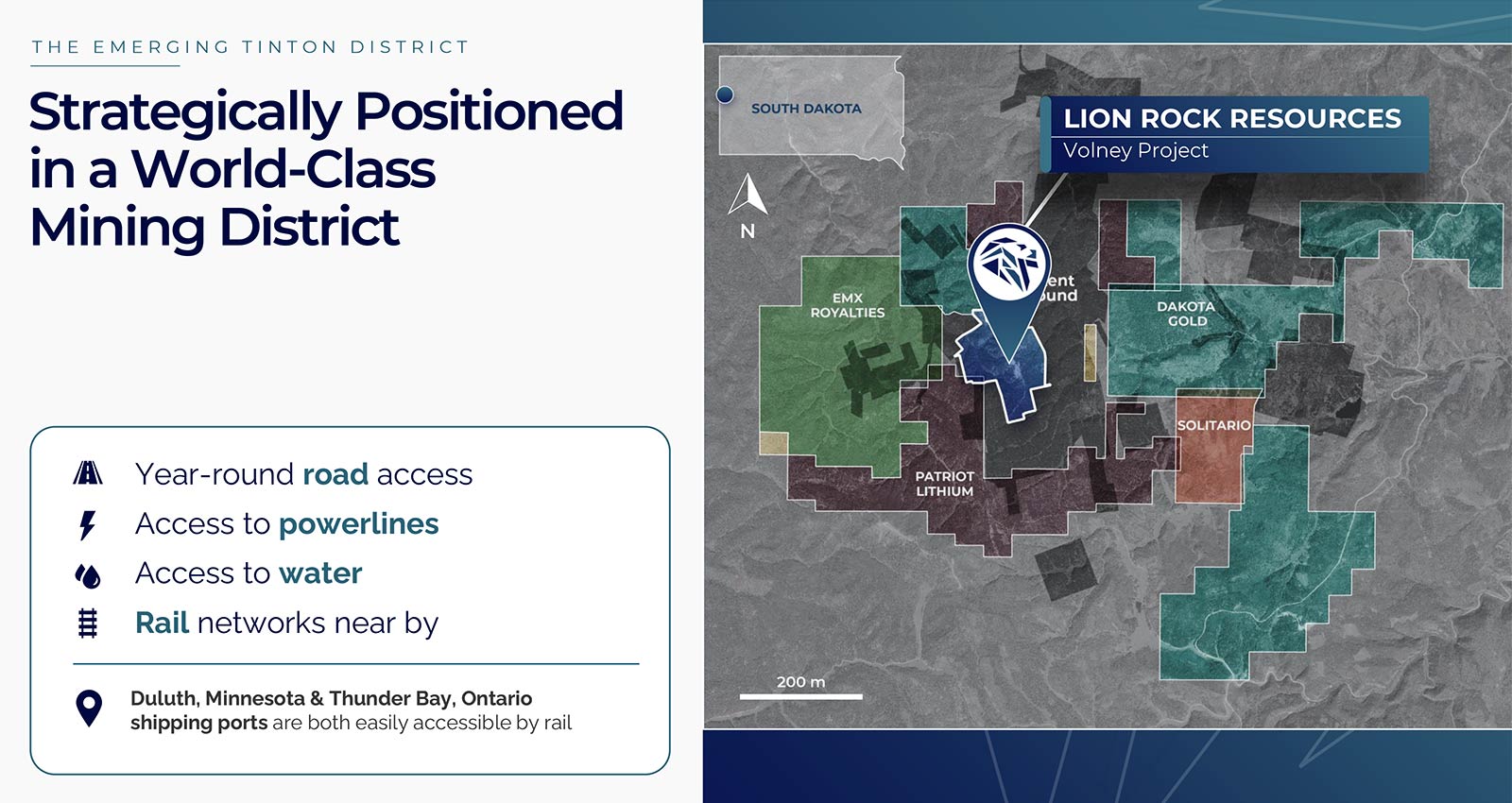
Honestly, that’s what drew the Lion Rock team to the property in the first place. We started the negotiations with the landowners… starting down this track of getting the property when the lithium price was going crazy three or four years ago. And it really did stand out as the best lithium opportunity in North America for the ROAR team to pursue.
There’s a lot of lithium expertise on the team. And these pegmatites have never been systematically explored. Everyone has commented that they're lithium-bearing. A few people excavated a couple of tonnes of it during World War II to supply lithium for the war effort but no one has ever done that systematic sampling that you need to do to prove that there’s an orebody there.
We showed up onsite and started sampling and started seeing 3%, 4%, 5% lithium oxide all over the place. Then, last year, we started mapping for the first time. The property hasn’t even been geologically mapped before. We didn’t even know how many pegmatites there were. We ended up mapping over 35 significant pegmatites greater than 10 meters width.
We sampled every single one of them in the course of mapping, and they all yielded values over 1% Li2O and up to 4-5% Li2O. So these are all high-grade lithium pegmatites.
All we need to know now is if there’s tonnage to this and if there’s an economically viable deposit. The grade is certainly there.
The grades are really impressive to me. In a world where 1.5% Li2O is a great economic grade to have, and relatively large pegmatites potentially have decent volume at 4% Li2O; it’s almost concentrate grade for lithium. And it’s there at surface just like these gold targets.
I believe there were only 8 historic drill holes drilled there during World War II, and the deepest one went only 50 meters below surface. And some of those holes yielded lithium intercepts.
Gerardo Del Real: So we know it goes down at least to 50 meters, right?
Jeff Hrncir: Yes. And hopefully, they'll go down a lot further.
Gerardo Del Real: And again, this is outcropping.
Jeff Hrncir: Yes, outcropping. And some of these pegmatites are large. They’re 700 meters long and up to 300 meters across. The 4% lithium zones within them are 100 meters across within those pegmatites. These are big things.
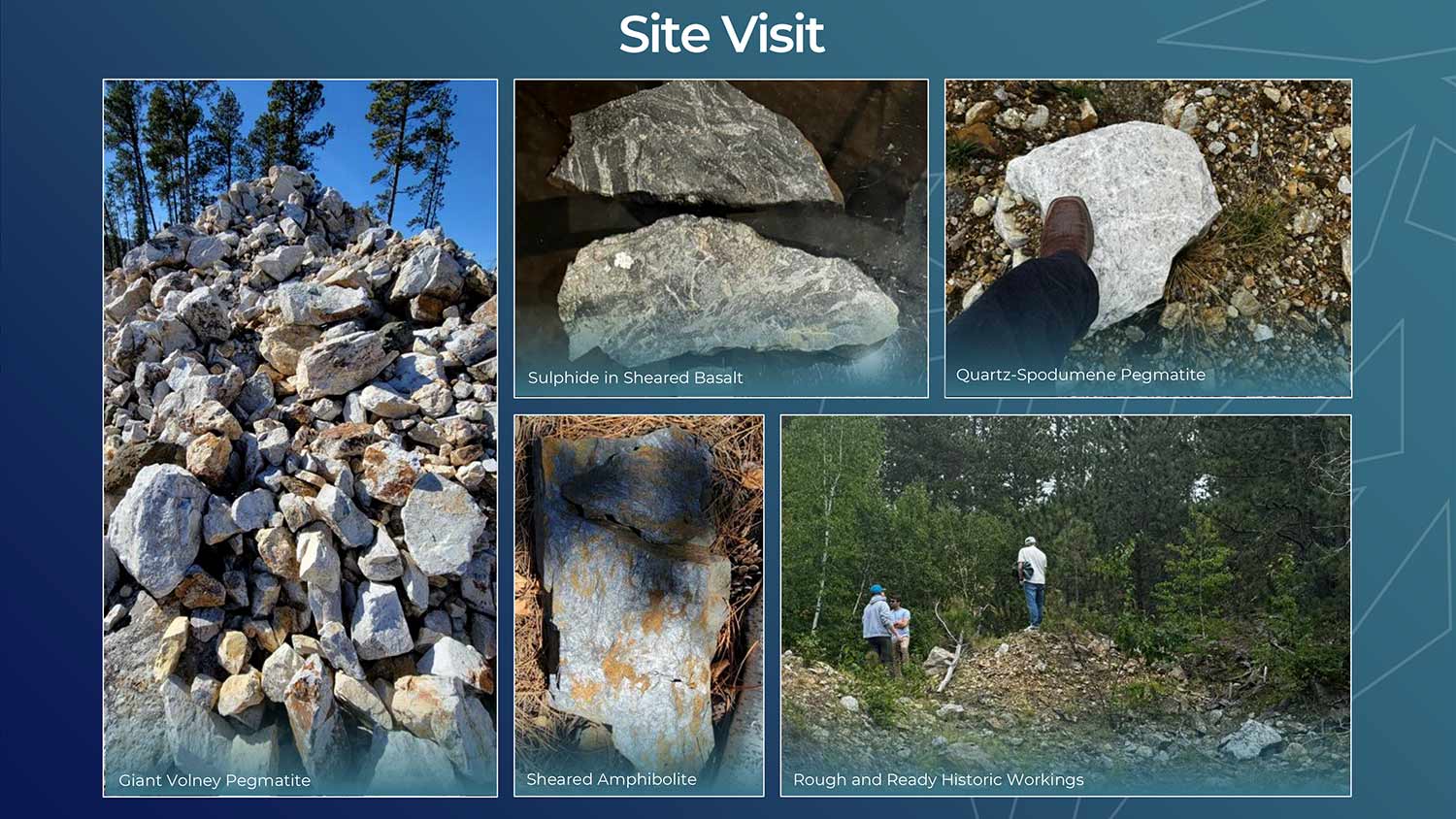
It’s not a single spodumene crystal in a 10-meter-wide dike like you see in a lot of these other junior companies. These are big pegmatites.
Gerardo Del Real: I don't want the audience to be overwhelmed by the abundance of richness in the mineral system but I’d like to briefly touch on the tin. The historical tin production and the grades are ridiculous as well. Can you speak to that a bit?
Jeff Hrncir: Yes, and, candidly, I don’t know much about tin. Until we started down this, I’d never really met other geologists, even before this process, that knew much about tin.
But the Volney project is situated in the Tinton Mining District, and it’s so named because it was one of the most productive tin districts in the United States historically. In fact, the Rough & Ready tin mine on the property was the single most productive hard rock tin mine in US history.
And there’s tin in all of this lithium. We’re sampling these pegmatites for lithium, tin, tantalum, niobium — these other minerals are present in them. And especially around the tin mine, you can actually go out and pick up cassiterite crystals up to the size of your fist. To me, that’s really unusual as well.
So when we begin drilling these pegmatites, all of those metals will get assayed for. There won’t be a dedicated tin program or lithium program. We’re going to drill the pegmatites, we’ll assay for all those metals, and we’re just going to see what the grades end up being on things like tin and tantalum.
We know they’re there, and we know that they’re there in such concentrations they were mined historically. So it’s what kind of a resource we can put together now through drilling.
Gerardo Del Real: I’ve been trying to chase you down here for a couple of weeks. You’ve been in the field doing the work. I am a happy shareholder, by the way, so keep up the great work. You’re in the field now. What comes next?
Jeff Hrncir: We’ll be finalizing the drill permit; we’re about to be fully permitted for 78 platforms — up to eight holes per platform.
To put that in perspective, that’s more potential drill holes than all of the other explorers in the district combined for the last five years. It’s an aggressive program. But we think the property warrants taking a lot of swings, drilling a lot of holes, and so we’ll be ready for that.
We have all of the logistics settled. We have our whole office and core shed set up. All of the personnel have been hired. The logistics — down to getting the water source for drilling, the water truck drivers — all of that is ready to go.
And I anticipate within weeks, hopefully, we’ll be drilling our first hole on the Volney project.
[Editor’s Note: Drilling is now underway.]
Gerardo Del Real: I hate to put you on the spot but I’m going to ask you for the crystal ball: what are you expecting to see once those assays start coming back?
Jeff Hrncir: Yes, hopefully by August or perhaps early September, we’ll start getting assays back en masse. And I’m a gold guy specifically so maybe I’ll address the gold.
Gerardo Del Real: Let’s do it.
Jeff Hrncir: I really hope to see widths and grades like we see in those historical reports. Those reports were done by very credible geologists. They might be 100 years old but they were done by the state mine inspector and the head of the geology department at the South Dakota School of Mines.
These weren’t just random guys offering an opinion. And the work that we’ve done has shown that there are values up to 189.5 grams per tonne Au in boulders sitting in that gold-in-soil anomaly that’s 100 meters wide.
I hope we can actually, almost from grassroots, cut 100 meters of 5 grams per tonne Au. I think that’s possible on this property. And that is a bit of geofantasy — so put a big asterisk on it — but the geology has supported that kind of a target.
Gerardo Del Real: Well, look, if we get 50 meters of two-and-a-half grams, I’ll still be a happy shareholder.
Jeff Hrncir: That’s right… and I would really like to hit that 100-gram-meter threshold that I know a lot of people look for because once you start seeing 100-gram-meter-type intercepts, you know the thing is probably an economically viable deposit. So I’d really like to cross that mark and then just see how big it gets from there.
Gerardo Del Real: Yes, those ounces add up quick at that point, right?
Jeff Hrncir: Yes, they do.
Gerardo Del Real: Jeff, it has been an absolute pleasure and well worth the wait. I want to thank you for your time. I hope you and I are chatting here in the following weeks and months talking about the vision, the plan, and then the results. The proof is in the pudding, right? We’ll see what that pudding is.
Jeff Hrncir: Yes, exactly.
Gerardo Del Real: Thank you so much for your time, Jeff.
Jeff Hrncir: Thank you, Gerardo.
The Lion Rock Resources Opportunity
With gold trading near all-time highs above US$4,000 an ounce and lithium poised for a sharp rebound, Lion Rock Resources (TSX-V: ROAR)(OTCQB: LRRIF) is perfectly positioned at the intersection of two of the most important metals in the world today.
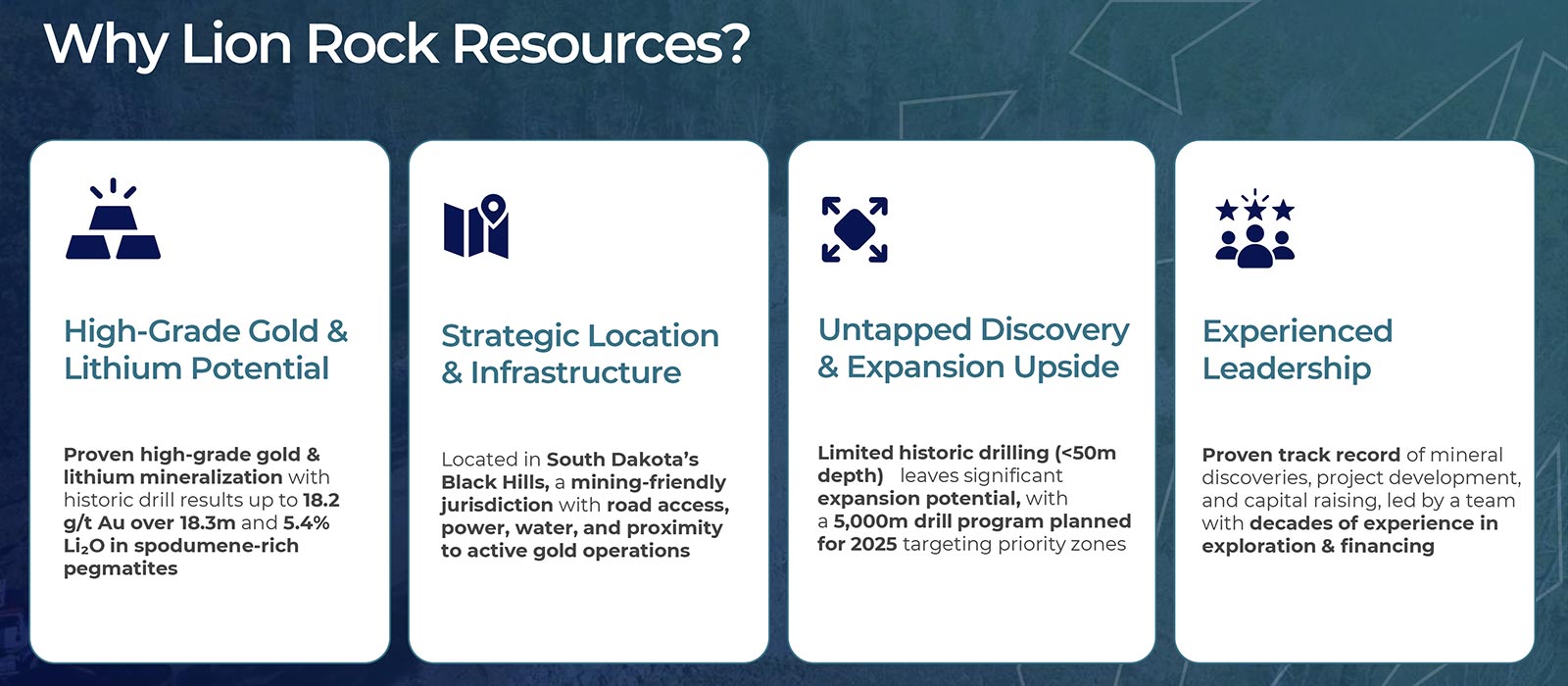
The company’s Volney Gold-Lithium Project in Black Hills, South Dakota, offers high-grade historical results and robust upside potential — making it a rare opportunity for investors seeking ground-floor exposure to an under-the-radar resource play with drills turning for the first time ever.
You heard directly from Lion Rock chief geologist Dr. Jeff Hrncir. He says:
“Every 100 meters you could prove that it extends down through drilling… so this thing could reach multi-million-ounce territory pretty quickly. And that’s the potential of this district, frankly.”
In a sector where timing and access mean everything, Lion Rock’s flagship project checks all the pertinent boxes for success on the ground.
It’s the type of setup experienced resource investors seek: early-stage, data-driven, and led by a proven team with a clear path to unlocking near- and long-term shareholder value.
A Tiny Market Cap with Big Upside Potential
Lion Rock Resources is a true under-the-radar opportunity, trading at a sub-US$30 million market cap with just ~106 million shares outstanding (non-fully-diluted) all while boasting compelling fundamentals.
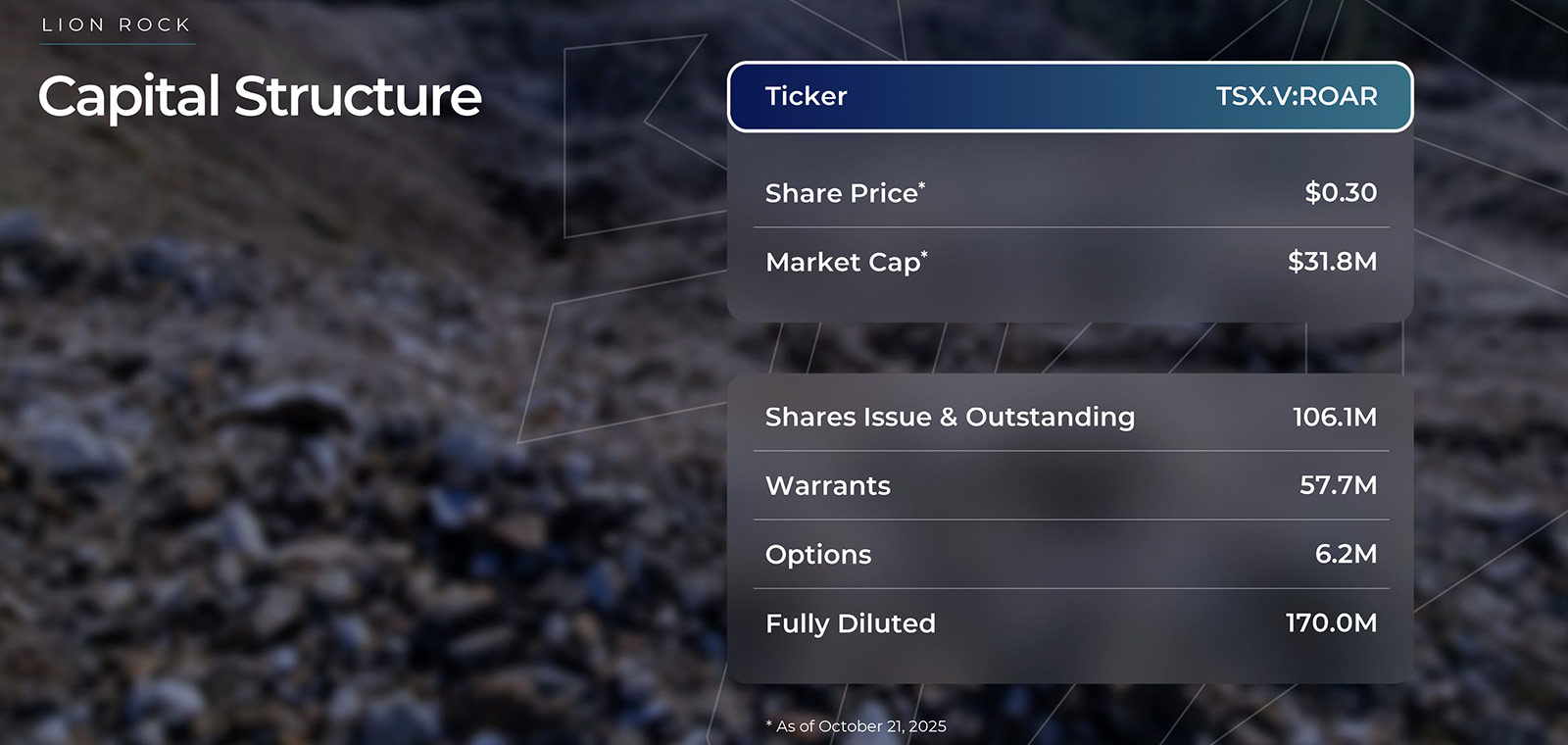
That gives speculators a rare early entry point with drilling now underway and catalysts ahead that could put Volney squarely on the market’s radar.
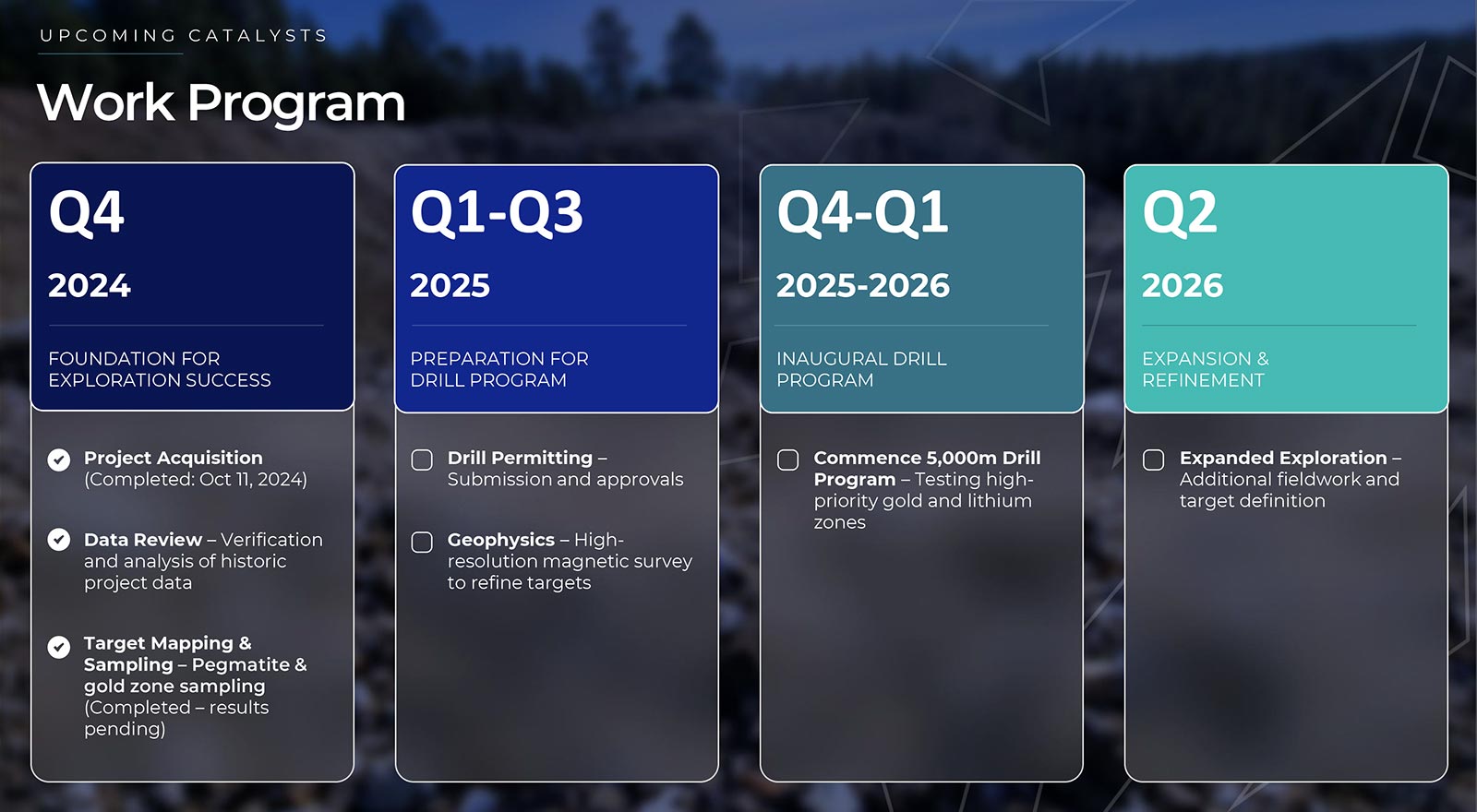
With gold holding strong above US$4K and lithium poised for a sustained rebound, Lion Rock offers textbook early-stage leverage — with maiden drilling at Volney now adding discovery torque to the story.
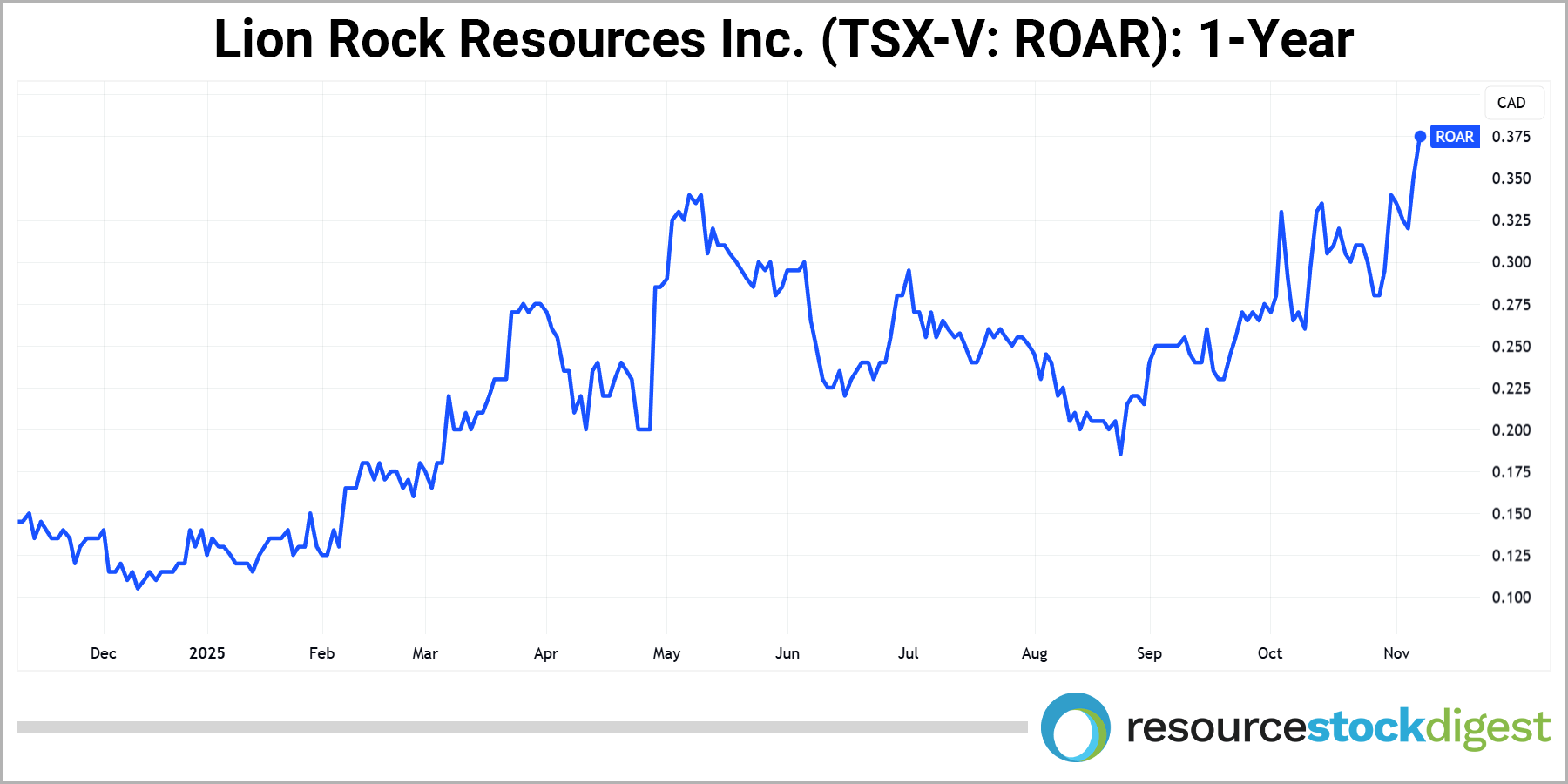
Right now is an opportune time to be taking a closer look at Lion Rock Resources Inc. — symbol ROAR on the Toronto Venture Exchange and symbol LRRIF on the US OTCQB.
A great place to start is Lion Rock’s corporate website.
There, you can sign up to receive updates directly from the company, view the most recent Corporate Presentation and much more.
Be sure to also follow our ongoing coverage and our exclusive interviews with upper management here.
— Resource Stock Digest Research
Click here to see more from Lion Rock ResourcesIMPORTANT DISCLAIMER & DISCLOSURES
Resource Stock Digest, as a publisher, is not a broker, investment advisor, or financial advisor in any jurisdiction.
Please do not rely on the information presented by Resource Stock Digest as personal investment advice.
If you need personal investment advice, kindly reach out to a qualified and registered broker, investment advisor, or financial advisor.
The communications from Resource Stock Digest should not form the basis of your investment decisions. Examples we provide regarding share price increases related to specific companies are based on randomly selected time periods and should not be taken as an indicator or predictor of future stock prices for those companies.
Lion Rock Resources has sponsored this report.
The information in this newsletter does not constitute an offer to sell or a solicitation of an offer to buy any securities of a corporation or entity, including U.S. Traded Securities or U.S. Quoted Securities, in the United States or to U.S. Persons. Securities may not be offered or sold in the United States except in compliance with the registration requirements of the Securities Act and applicable U.S. state securities laws or pursuant to an exemption therefrom.
Any public offering of securities in the United States may only be made by means of a prospectus containing detailed information about the corporation or entity and its management as well as financial statements. No securities regulatory authority in the United States has either approved or disapproved of the contents of any newsletter. Neither Resource Stock Digest nor any employee of Resource Stock Digest is registered with the United States Securities and Exchange Commission (the “SEC”): as a “broker-dealer” under the Exchange Act, as an “investment adviser” under the Investment Advisers Act of 1940, or in any other capacity. Resource Stock Digest, its owners, directors, and employees are also not registered with any state securities commission or authority as a broker-dealer or investment advisor or in any other capacity.
HIGHLY BIASED:
In our role, we aim to highlight specific companies for your further investigation; however, these are not stock recommendations, nor do they constitute an offer or sale of the referenced securities. Resource Stock Digest has received cash compensation from Lion Rock Resources and is thus extremely biased. It is crucial that you conduct your own research prior to investing. This includes reading the companies' SEDAR and SEC filings, press releases, and risk disclosures. The information contained in our profiles is based on data provided by the companies, extracted from SEDAR and SEC filings, company websites, and other publicly available sources.
Resource Stock Digest, and its owners, directors, employees, and members of their households may own shares of Lion Rock Resources. Therefore, Resource Stock Digest is extremely biased. Measures are in place such that no shares will be sold during the active awareness campaign.
HIGH RISK:
The securities issued by the companies we feature should be seen as high risk; if you choose to invest, despite these warnings, you may lose your entire investment. You must be aware of the risks and be willing to accept them in order to invest in financial instruments, including stocks, options, and futures.
NOT PROFESSIONAL ADVICE:
By reading this, you agree to all of the following: You understand this to be an expression of opinions and NOT professional advice. You are solely responsible for the use of any content and hold Resource Stock Digest, and all partners, members, and affiliates harmless in any event or claim. While Resource Stock Digest strives to provide accurate and reliable information sourced from believed-to-be trustworthy sources, we cannot guarantee the accuracy or reliability of the information. The information provided reflects conditions as they are at the moment of writing and not at any future date. Resource Stock Digest is not obligated to update, correct, or revise the information post-publication.
FORWARD-LOOKING STATEMENTS:
Certain information presented may contain or be considered forward-looking statements. Such statements involve known and unknown risks, uncertainties, and other factors that may cause actual results or events to differ materially from those anticipated in these statements. There can be no assurance that any such statements will prove to be accurate, and readers should not place undue reliance on such information. Resource Stock Digest does not undertake any obligations to update the information presented or to ensure that such information remains current and accurate.